Inconsistent Filling, Dripping or Air Bubbles? A Practical Checklist for Tube Filling Machines
Overview
Filling accuracy is often treated as a machine specification.
In practice, it is a process result, not just a machine capability.
Inconsistent filling, dripping, or air bubbles rarely come from a single cause. They are usually the result of interaction between product properties, filling system, and operating conditions.
Understanding these interactions is more important than focusing on machine parameters alone.
What Affects Filling Accuracy in Tube Filling Machines
Filling accuracy is influenced by multiple factors working together:
- Product viscosity and flow behavior
- Filling system type
- Air presence in product or system
- Temperature and process conditions
- Machine setup and operation consistency
Filling performance should be evaluated as a system-level result, not as a single machine parameter.
Common Filling Accuracy Problems in Production
In real production, filling issues usually appear in specific forms:
- Inconsistent filling volume between cycles
- Dripping after filling
- Air bubbles inside the product
- Overfilling or underfilling during continuous operation
- Gradual deviation over time
These issues are often attributed to machine precision, but in many cases, they are related to product behavior and process stability.
Common Misjudgments About Filling Accuracy
In many projects, filling issues are approached from the wrong direction:
- Assuming the machine lacks precision
- Increasing speed before stabilizing the process
- Adjusting parameters without understanding product behavior
Filling accuracy problems are often process-related rather than equipment-related.
1. Product Viscosity Stability
Product behavior is the foundation of filling accuracy:
- Is viscosity stable during operation?
- Does temperature affect flow behavior?
- Does the product change over time (settling, thickening)?
Stable viscosity is critical for consistent filling performance.
2. Product Foaming Behavior
Some products introduce air during handling:
- Does the product foam when agitated?
- Are air bubbles visible after filling?
Foaming can lead to inaccurate volume and unstable filling results, even if machine operation is consistent.
3. Filling System Selection
Different systems are suited to different product behaviors:
- Piston filling (commonly used for higher viscosity products)
- Pump-based filling (for lower viscosity or fluid products)
Key considerations:
- Is the system matched to product characteristics?
- Is anti-drip or suck-back required?
Matching filling system to product type is essential for accuracy.
4. Temperature & Process Conditions
Temperature directly affects product behavior:
- Is the product sensitive to temperature changes?
- Is temperature controlled during filling?
Changes in temperature can affect viscosity, which in turn impacts filling consistency.
5. Air Entrapment & System Condition
Air in the system affects filling stability:
- Is the product degassed or stable before filling?
- Is the system properly primed?
- Is air introduced during operation?
Air presence in the filling system is a known cause of inconsistency and visible defects.
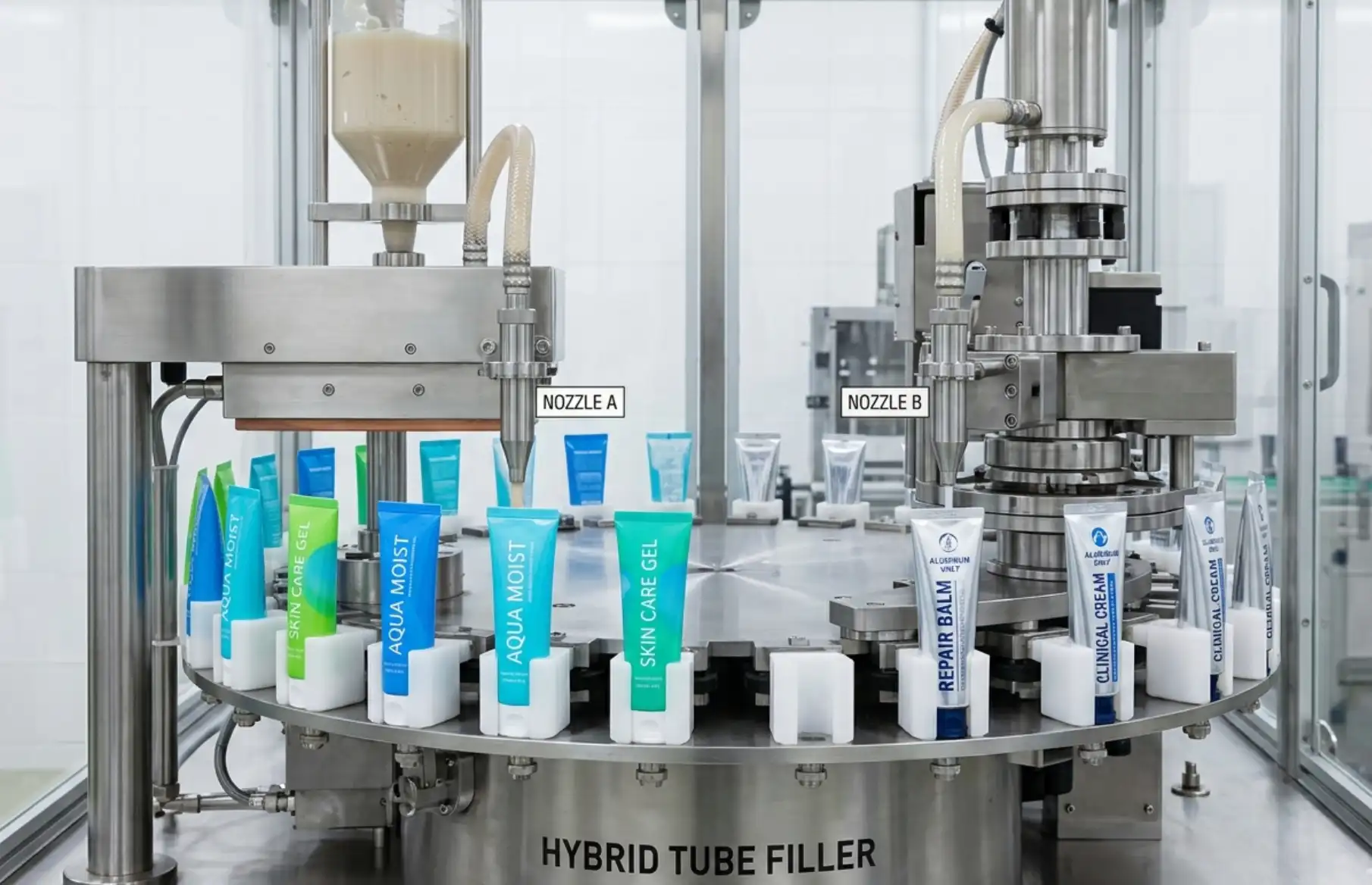
6. Nozzle Design & Filling Position
Filling method affects final result:
- Is nozzle position correctly aligned?
- Is bottom-up filling used where needed?
- Is nozzle movement synchronized with filling?
Incorrect nozzle setup can cause splashing, air inclusion, or uneven filling.
7. Continuous Operation Stability
Some issues only appear over time:
- Does filling remain stable during long runs?
- Are deviations observed after continuous operation?
Short testing may appear stable, but instability often becomes visible during extended production.
Quick Filling Accuracy Checklist (←PDF Download)
| Check Point | What to Confirm | Potential Risk if Ignored |
|---|---|---|
| Product viscosity | Stable during operation | Volume deviation |
| Product foaming | Controlled or minimal | Air bubbles, inaccuracy |
| Filling system | Matched to product type | Dripping, inconsistency |
| Temperature condition | Controlled if required | Flow instability |
| Air in system | Properly managed | Filling variation |
| Nozzle setup | Correct alignment and movement | Splashing, uneven filling |
| Continuous stability | Verified over time | Gradual deviation |
What Happens When Filling Accuracy Is Overlooked
In many projects, filling appears stable during initial setup but becomes inconsistent later:
- Filling volume varies during continuous operation
- Dripping appears after multiple cycles
- Air bubbles increase under higher production speed
- Product behavior changes over time
Experience:These issues usually result from combined effects of product behavior and process conditions, rather than a single machine fault.
When Should You Stop Adjusting and Start Testing?
In practice, engineers move to testing when:
- Filling remains inconsistent despite stable machine settings
- Product behavior changes during production
- Air bubbles or dripping cannot be eliminated through adjustment
- Different batches produce different results
Experience:If repeated adjustments do not stabilize filling, the issue is usually not operational — it is related to product–system mismatch.
How to Verify Filling Accuracy Before Production
Filling accuracy cannot be confirmed through specifications alone.
A practical approach includes:
- Testing with actual product under production conditions
- Observing performance during continuous operation
- Checking for air bubbles and dripping
- Evaluating system response to product variation
Testing under real operating conditions is the most reliable way to confirm filling performance.
Advantages of Proper Filling Evaluation
- Improves consistency of output
- Reduces material waste
- Minimizes rework and adjustment
- Enhances production stability
Applications
Filling accuracy is critical in:
- Cosmetics (cream, gel, lotion)
- Pharmaceuticals (ointments, topical products)
- Food (paste, sauces)
- Industrial products (adhesives, sealants)
FAQ
Q1. Why is filling inconsistent even with a new machine?
A: Often related to product viscosity, air content, or system matching rather than machine precision.
Q2. Does higher precision equipment guarantee better accuracy?
A: No. Accuracy depends on the interaction between product, system, and process conditions.
Q3. Can one filling system handle all products?
A: Different products require different filling approaches.
Q4. What is the most reliable way to confirm filling accuracy?
A: Testing with actual product under real production conditions.
Related Guides for Process Optimization
If you are evaluating the full system:
- → Tube Filling Machine Selection Checklist
- → Tube Compatibility Checklist
- → Why Tube Sealing Fails in Production
- → Filling Accuracy Checklist
- → Pre-Installation Setup Checklist