How to Choose the Right Toothpaste Tube Filling Machine for Your Production
Choosing the right toothpaste tube filling machine needs to handle high-viscosity materials, maintain accurate filling volumes, ensure reliable tube sealing, and work smoothly with your overall toothpaste production line. The best solution depends on several factors, including your toothpaste formulation, tube material, production capacity, automation requirements, and future expansion plans.
This guide will help you understand how a toothpaste tube filling machine works, what factors you should evaluate before purchasing, and how to choose equipment that matches your manufacturing needs.
What Is a Toothpaste Tube Filling Machine?
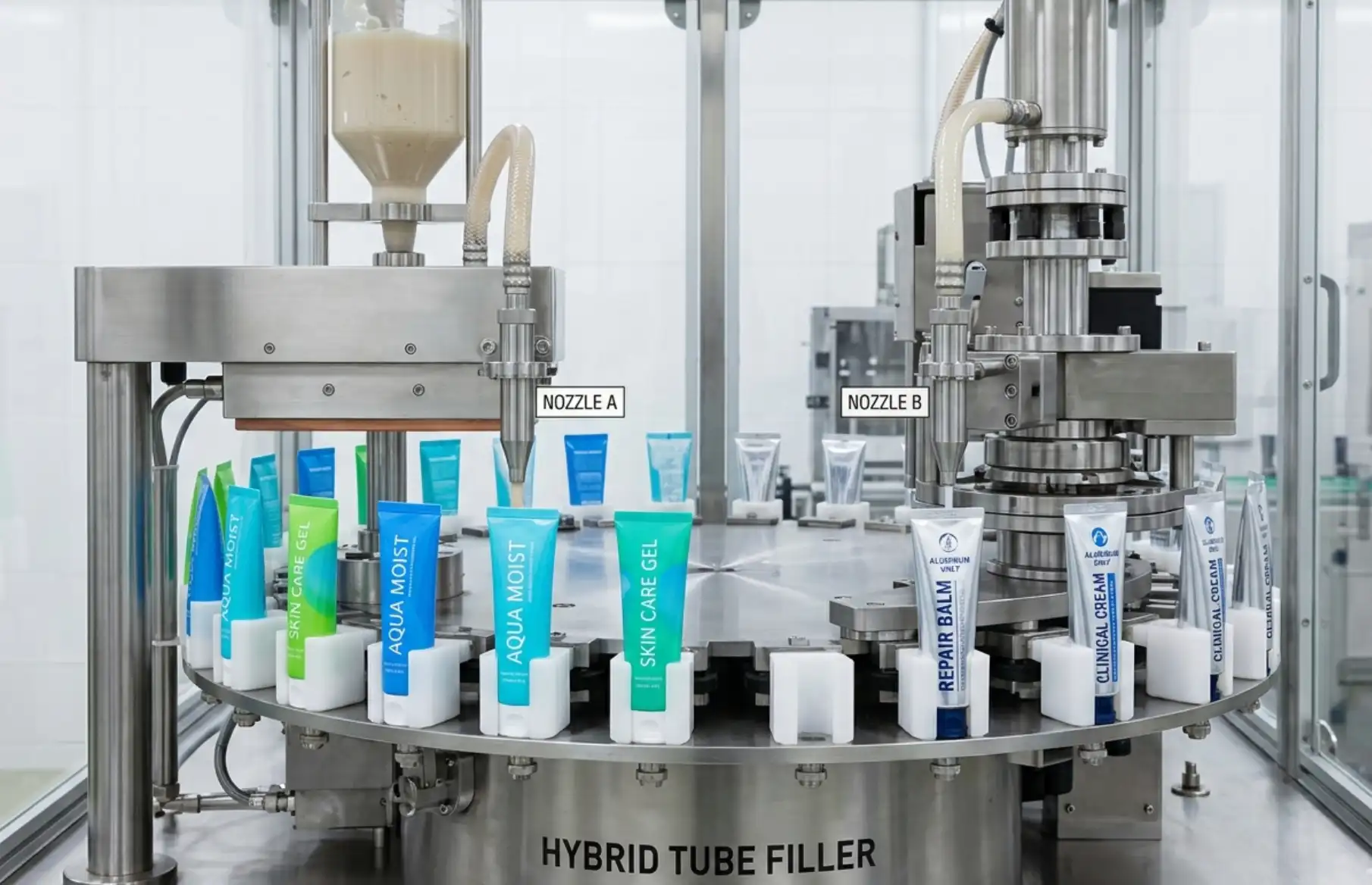
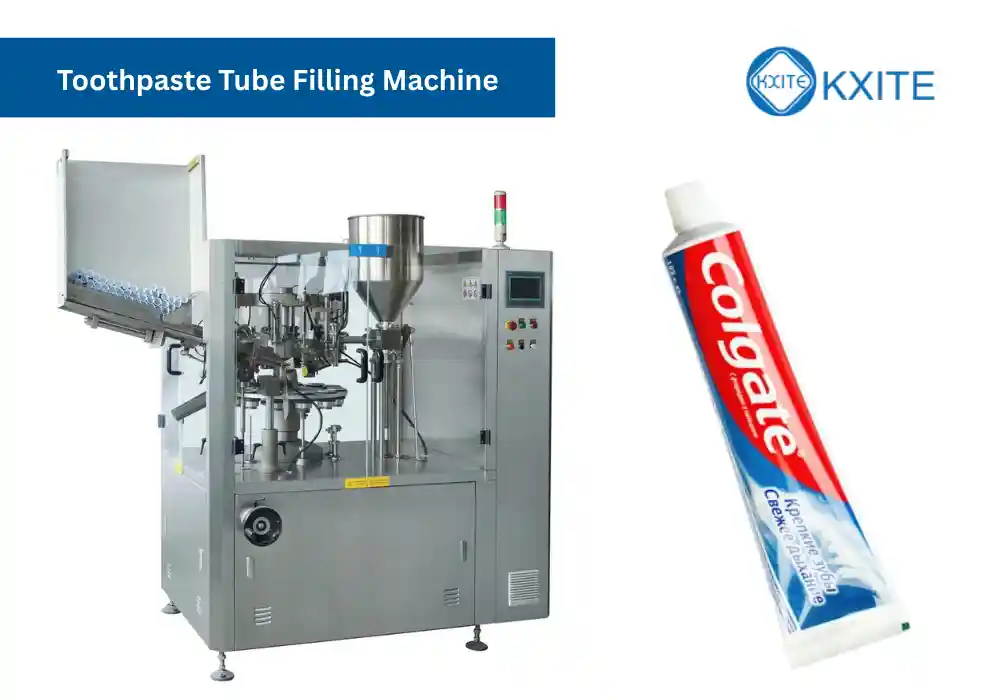
A toothpaste tube filling machine can fill toothpaste or similar high-viscosity products into tubes and complete subsequent packaging processes such as sealing, coding, and inspection. A complete toothpaste manufacturing process usually includes:
Raw material preparation → Mixing and homogenization → Vacuum deaeration → Storage → Tube filling → Tube sealing → Coding → Final packaging
The main purpose of a toothpaste tube filling machine is to ensure:
- Accurate filling volume for every tube
- Stable production speed
- Clean and reliable sealing
- Reduced product waste
- Consistent appearance of finished products
For industrial toothpaste manufacturers, a suitable filling machine helps improve production efficiency while reducing manual operation and quality variation.
How Does a Toothpaste Tube Filling Machine Work?
Although different manufacturers may use different designs, most automatic toothpaste filling machines follow a similar process.
1. Tube Feeding and Loading
The empty tubes are automatically supplied to the filling machine through a tube feeding system.
The machine positions each tube correctly before filling to ensure:
- Stable filling operation
- Accurate product dosing
- Proper sealing position
Tube positioning is especially important for printed plastic or laminate tubes because incorrect orientation may affect the final appearance of the package.
2. Tube Positioning and Alignment
Before filling, the machine aligns the tube according to the required production parameters.
This step ensures:
- Filling nozzle enters the correct position
- Product is filled without contamination
- Sealing area remains clean
For premium toothpaste products, packaging appearance is an important part of brand value, so precise tube positioning directly affects the final product quality.
3. Toothpaste Filling Process
The filling system delivers toothpaste into each tube according to the preset filling volume. Because toothpaste is a high-viscosity product, filling performance depends on several factors:
| Factor | Why It Matters |
|---|---|
| Toothpaste viscosity | Affects filling speed and stability |
| Product texture | Influences flow characteristics |
| Filling accuracy | Determines product consistency and waste |
| Air content | May affect appearance and filling quality |
A well-designed toothpaste filling machine should maintain stable filling performance even when handling different toothpaste formulations. For example, gel toothpaste, herbal toothpaste, and fluoride toothpaste may have different flow characteristics, requiring appropriate filling parameters and machine adjustments.
4. Tube Sealing
After filling, the machine seals the tube according to the tube material and production requirements. Common toothpaste tube materials include:
| Tube Material | Main Consideration |
|---|---|
| Plastic tubes | Sealing temperature and consistency |
| Laminate tubes | Reliable sealing without damaging the tube |
| Aluminum tubes | Proper folding and sealing control |
5. Coding and Inspection
Many toothpaste filling machines integrate coding and inspection functions. Typical operations include:
- Batch number printing
- Production date marking
- Expiry date coding
- Basic quality inspection
These functions help manufacturers meet product traceability requirements.
What Should You Consider Before Buying a Toothpaste Tube Filling Machine?
Before requesting quotations from suppliers, you should evaluate the following factors.
1. Your Toothpaste Formulation Characteristics
Different toothpaste formulations can behave differently during filling.
For example:
- Gel toothpaste may have different flow characteristics compared with traditional paste toothpaste.
- Herbal toothpaste containing particles or special ingredients may require additional consideration.
- Children's toothpaste or premium toothpaste may require higher appearance standards.
Before purchasing equipment, you should provide information such as:
- Product viscosity range
- Filling volume
- Product characteristics
- Whether the formula changes frequently
This helps suppliers recommend the correct filling system and configuration.
2. Required Production Capacity
Production capacity is one of the most important factors when selecting a toothpaste tube filling machine. You should calculate your requirement based on:
- Daily production target
- Working hours per day
- Number of production shifts
- Future growth expectations
For example, a factory producing several thousand tubes per day may have completely different requirements from a large toothpaste manufacturer producing tens of thousands of tubes daily. Do not select equipment only based on the maximum speed listed in the specification sheet. You should also consider:
- Changeover time
- Maintenance downtime
- Operator efficiency
- Integration with other equipment
3. Tube Size and Packaging Compatibility
Your tube specifications directly affect machine configuration. Before purchasing, confirm:
- Tube diameter
- Tube length
- Filling volume
- Tube material
- Sealing requirements
A machine designed for one tube format may require adjustments or additional components when handling different packaging sizes.
4. Filling Accuracy and Product Waste Control
Filling accuracy directly affects production cost. Even small filling errors can create significant material waste during high-volume production.
A suitable machine should provide you consistent filling volume,reduced toothpaste loss,sable production quality,and improving filling accuracy can significantly reduce unnecessary raw material consumption for large-scale production,
5. Automation Level
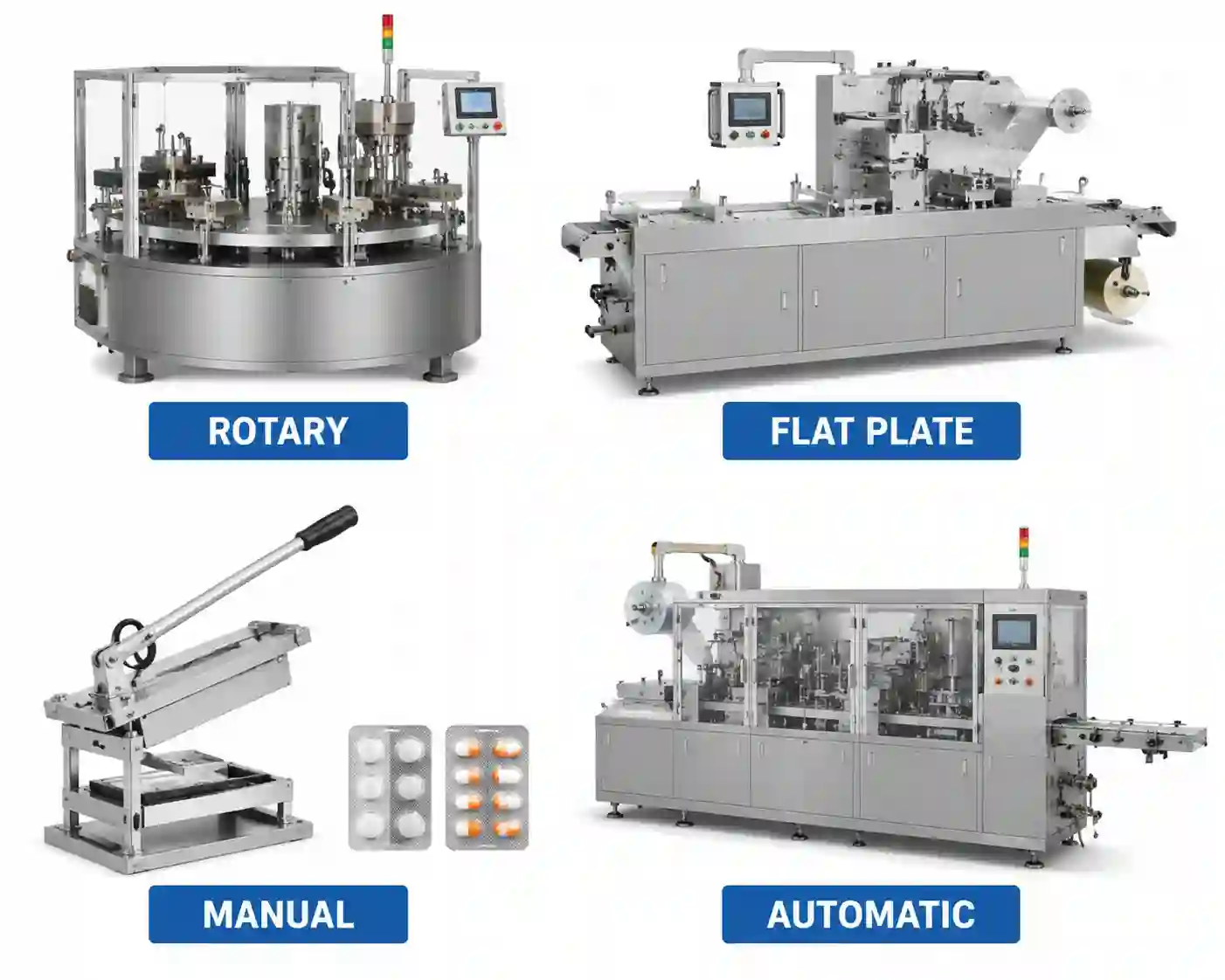
Toothpaste filling machines are available in different automation levels.
| Machine Type | Suitable For | Main Advantage |
|---|---|---|
| Manual filling machine | Small production or testing | Low investment |
| Semi automatic filling machine | Medium-scale production | Flexible operation |
| Fully automatic filling machine | Large-scale manufacturing | Higher efficiency and lower labor requirements |
When selecting automation level, consider not only your current production but also your future expansion plans.
Automatic vs Semi Automatic Toothpaste Filling Machine: Which One Do You Need?
The right decision on comparing automatic and semi automatic toothpaste filling machines depends on your production scale, labor availability, and investment plan.
| Comparison | Semi Automatic Machine | Automatic Machine |
|---|---|---|
| Production volume | Small to medium | Medium to large |
| Labor requirement | Higher | Lower |
| Initial investment | Lower | Higher |
| Operation flexibility | Higher | Depends on configuration |
| Suitable users | Small factories, startups | Industrial manufacturers |
A semi automatic machine may be suitable if you:
- Produce limited quantities
- Have multiple product types
- Need flexible operation
An automatic toothpaste filling machine is usually preferred if you:
- Require continuous production
- Need stable output
- Want to reduce manual handling
- Plan long-term expansion
How Does a Toothpaste Tube Filling Machine Fit Into Your Production Line?
A toothpaste filling machine normally works as part of a larger production system rather than as a standalone machine.
A typical production flow includes: Mixing System → Storage Tank → Tube Filling Machine → Tube Sealing → Cartoning Machine → Finished Product Packaging
When planning your production line, you should consider:
- Equipment connection requirements
- Production speed matching
- Space requirements
- Operator workflow
- Future automation upgrades
A well-balanced production line can prevent bottlenecks where one machine operates faster while another limits overall output.
How to Choose a Toothpaste Tube Filling Machine Supplier?
Selecting the right supplier is as important as selecting the machine itself.
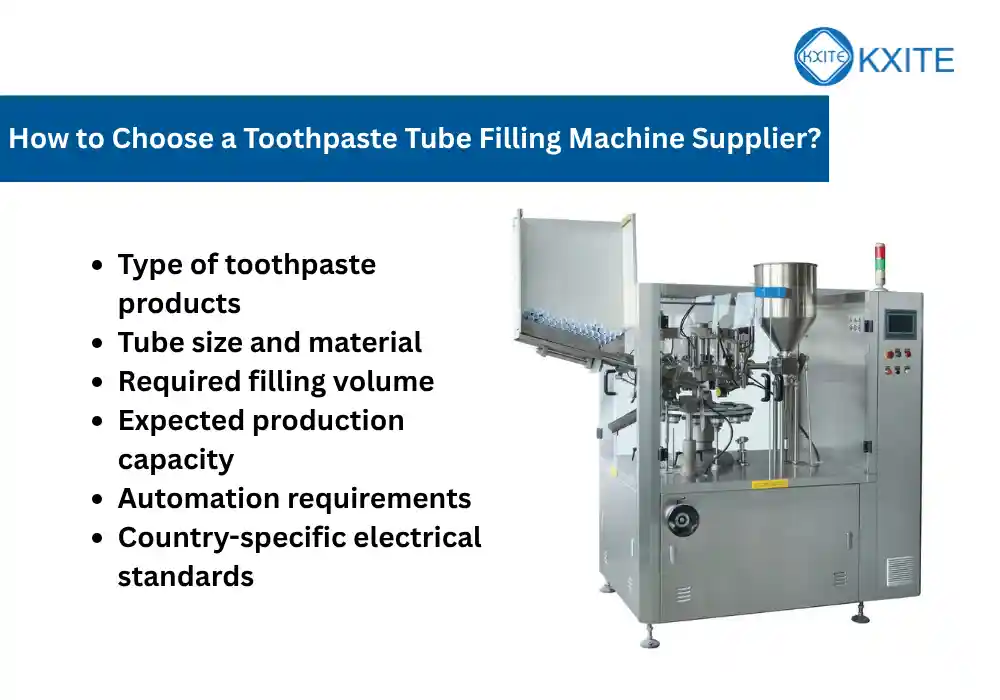
Before contacting suppliers, prepare the following information:
- Type of toothpaste products
- Tube size and material
- Required filling volume
- Expected production capacity
- Automation requirements
- Country-specific electrical standards
This information allows suppliers to provide a more accurate solution.
When evaluating suppliers, consider:
- Technical Experience: A supplier with experience in toothpaste or similar high-viscosity products can better understand challenges related to filling stability and sealing quality.
- Customization Capability:Your product requirements may change over time. A supplier should be able to support: Different tube sizes,filling volumes and production upgrades.
- After-Sales Support:such as Installation support, Training availability, Spare parts supply, Technical response time
Common Mistakes When Buying Toothpaste Filling Equipment
Choosing Only Based on Price
The lowest initial investment does not always mean the lowest total cost. A cheaper machine may result in:
- Higher maintenance costs
- More production downtime
- Lower filling consistency
Ignoring Future Product Changes
If you plan to introduce new toothpaste products in the future, consider whether the machine can adapt to:
- Different formulations
- Different tube sizes
- Different production volumes
Not Confirming Packaging Compatibility
Tube material and sealing requirements should be confirmed before purchase.
Different packaging materials may require different machine configurations.
Overlooking Maintenance Requirements
A machine that is difficult to clean or maintain may reduce production efficiency over time.
Before purchasing, ask suppliers about:
- Cleaning procedures
- Replacement parts
- Maintenance intervals
Engineer Tips: Tube Filling Machines Maintenance Before Downtime Hits
Tube Filling Machine Selection Checklist
Daily Operation Checklist for Tube Filling Machines(PDF Download)
Tube Compatibility in Filling Machines(Free PDF Checklist)
FAQ About Toothpaste Tube Filling Machines
Can a toothpaste tube filling machine be used for OEM toothpaste production?
Yes. Many OEM toothpaste manufacturers use tube filling machines to produce different brands and formulations. However, the machine configuration should match the variety of products, tube formats, and production schedules required by your customers.
What documents should you request before purchasing a toothpaste filling machine?
Before finalizing your purchase, you should request technical documents including:
- Machine layout drawing
- Electrical specifications
- Operation manual
- Spare parts list
- Installation requirements
These documents help you prepare your factory environment and avoid delays during installation.
How long does a toothpaste filling machine usually take to install?
Installation time depends on machine complexity, factory preparation, and whether the equipment is integrated with other production systems. Before shipment, confirm installation requirements and commissioning procedures with your supplier.
Can toothpaste filling machines support private label products?
Yes. Private label manufacturers often require flexible production equipment because they may produce different brands with different tube designs, filling volumes, and packaging requirements.
What information affects the final quotation of a toothpaste tube filling machine?
The final quotation is usually influenced by:
- Production speed
- Automation level
- Filling accuracy requirements
- Tube specifications
- Additional functions
- Customization requirements
Providing complete production information will help suppliers offer a more accurate solution.
Conclusion: Choose a Toothpaste Filling Solution Based on Your Production Needs
A toothpaste tube filling machine is an important part of your production process, but the best equipment is not necessarily the one with the highest speed or the lowest price.
To make the right decision, you need to evaluate your toothpaste formulation, production capacity, packaging requirements, automation goals, and future development plans.
By understanding how toothpaste filling machines work and what factors influence equipment selection, you can choose a solution that improves production efficiency, reduces waste, and supports long-term manufacturing growth.