How to Choose a Cosmetic Cream Filling Machine for Tube Production
Tube cosmetic cream filling can look straightforward on a production plan: prepare the cream, fill it into tubes, seal the tubes, and move them to the next packaging step. The difficulty usually appears in the very begeining of production . A face cream may run smoothly in one batch but behave differently after a formulation adjustment. A 50 ml retail tube may be easy to handle, while a 15 ml eye cream requires tighter control over filling volume. An OEM factory can finish one customer order without trouble, then lose production time when the next customer uses a different tube and a different cream. Therefore, for a professional cosmetic cream manufacturer, 4 issues have to be solved correctly to ensure production profitability: stable dosing, product loss, changeover time, and finished-tube quality.
4 Problems a Professional Cosmetic Cream Manufacturer Must Solve
1. Keep Different Cream Formulations Filling Consistently
Tube cosmetic creams do not all behave the same way during filling. Viscosity, texture, temperature, and formulation structure affect how easily the product moves through the filling system. Consider a factory producing a relatively thick face cream. If the product does not feed smoothly into the filling system, the operator may need to slow the process or make repeated adjustments. A different cream with better flow characteristics may run at a much higher practical output on the same machine.
Useful information for machine selection includes:
| Product information | Why it matters |
|---|---|
| Viscosity or viscosity range | Affects product transfer and dosing stability |
| Filling volume | Determines dosing requirements |
| Filling temperature | Affects product flow and handling |
| Formulation characteristics | Can affect filling consistency and residue |
| Expected batch size | Helps estimate practical production capacity |
For thicker or temperature-sensitive creams, testing the actual formulation is especially valuable. The filling pump or dosing system, product path, filling speed, and nozzle configuration can then be evaluated under real production conditions rather than with a standard demonstration product.
2. Stop Product Loss From Becoming a Hidden Production Cost
Material waste is easy to overlook when comparing machine quotations. Suppose an OEM factory runs several short batches every week. After one order is completed, some cream remains in the product path and the next product requires cleaning. The amount from one batch may look insignificant. Across hundreds of production changes, it becomes a measurable material cost.
The filling system should therefore be evaluated not only for dosing accuracy, but also for how product is transferred and how the product-contact parts are handled during cleaning. Ask where residual cream remains after a batch, which components need to be removed, and how the system is cleaned between formulations.
For expensive creams or small production batches, these details can matter more than a small difference in rated filling speed.
3. Make Frequent Multiple SKU Changes Smoothly
This is one of the biggest differences between cosmetic production and a single-product filling operation. An OEM/ODM manufacturer might run: 30 ml eye cream → 50 ml face cream → 100 ml hand cream within the same production week.
The changes may involve the formulation, filling volume, tube diameter, tube length, or sealing requirements. If each change requires extensive adjustment, the machine can spend a surprising amount of time waiting rather than filling.
A flexible filling and sealing machine should make the main format adjustments straightforward. Depending on the machine configuration, this can involve adjustable filling parameters, change parts for different tube formats, and accessible filling and sealing components.
When comparing machines, don't ask only:
How many tubes per minute can it fill?
Also ask:
What has to be changed when moving from one of my actual SKUs to another?
That answer gives you a much better picture of day-to-day productivity.
4. Keep the Finished Tube Looking Like a Cosmetic Product
A cosmetic cream can be correctly formulated and accurately filled, yet still look unprofessional if the tube leaves the line with poor positioning, inconsistent sealing, or product contamination. The tube needs to remain correctly positioned during filling and sealing. The filling nozzle also needs to deliver the required quantity without leaving excessive product around the tube opening.
For the sealing stage, the method must match the tube material and the finished appearance required by the brand. This becomes particularly important for OEM production. A variation that your operator considers acceptable may not meet the packaging standard specified by the brand customer.
Which Cosmetic Creams Are Suitable for Tube Filling?
Tube packaging is widely used for semi-solid cosmetic products because it works well across different retail formats and filling volumes.
Typical products include:
| Product | Typical filling consideration |
|---|---|
| Face cream | Stable dosing and clean finished appearance |
| Hand cream | Often thicker formulations and several package sizes |
| Eye cream | Small filling volumes and dosing consistency |
| Sunscreen cream | Formulation behavior and filling stability |
| Body cream | Larger volumes and multiple tube formats |
| Gel cream | Flow characteristics may differ from conventional creams |
The product name alone does not tell you whether a machine will perform well. Two face creams can have very different filling behavior. A 15 ml eye cream also places different demands on dosing than a 100 ml body cream. For a new formulation, provide the actual product to the machine supplier for testing. This gives both sides a practical basis for determining the filling system and operating conditions.
How to Choose a Cosmetic Cream Filling Machine
Once the product characteristics are clear, compare the machine against your actual production model. Four factors should be established first:
| Production factor | What to determine |
|---|---|
| Filling volume | Smallest and largest volumes |
| Tube formats | Diameter, length, material, and range |
| Production mix | Number of SKUs and average batch size |
| Required output | Tubes required per hour or shift |
These figures help determine whether you need a highly automated production line, a more flexible machine for frequent changeovers, or something between the two.
Start With the Filling Volume Range
If your product range runs from 15 ml eye cream to 100 ml body cream, don't evaluate the machine using only the most common 50 ml product.
The dosing system needs to cover the commercial range you actually intend to produce.
Small-volume products also make filling variation more noticeable. If 15 ml or 20 ml products are important to your business, include them in the machine trial.
Match the Filling System to the Cream
This is where a machine specification sheet can become misleading. Two machines may both be described as “cosmetic cream filling machines,” while their filling systems behave differently with your product.
During technical evaluation, look at:
- How the cream is fed into the filling system
- How the dosing volume is adjusted
- Whether the filling speed can be controlled
- How the nozzle handles the end of the filling cycle
- How product-contact components are cleaned
- Whether the configuration can accommodate your expected viscosity range
For a thick cream, the supplier should be able to explain why the proposed filling system is appropriate for the product rather than simply confirming that the machine “can fill cream.”
Match the Machine to Your Tube Range
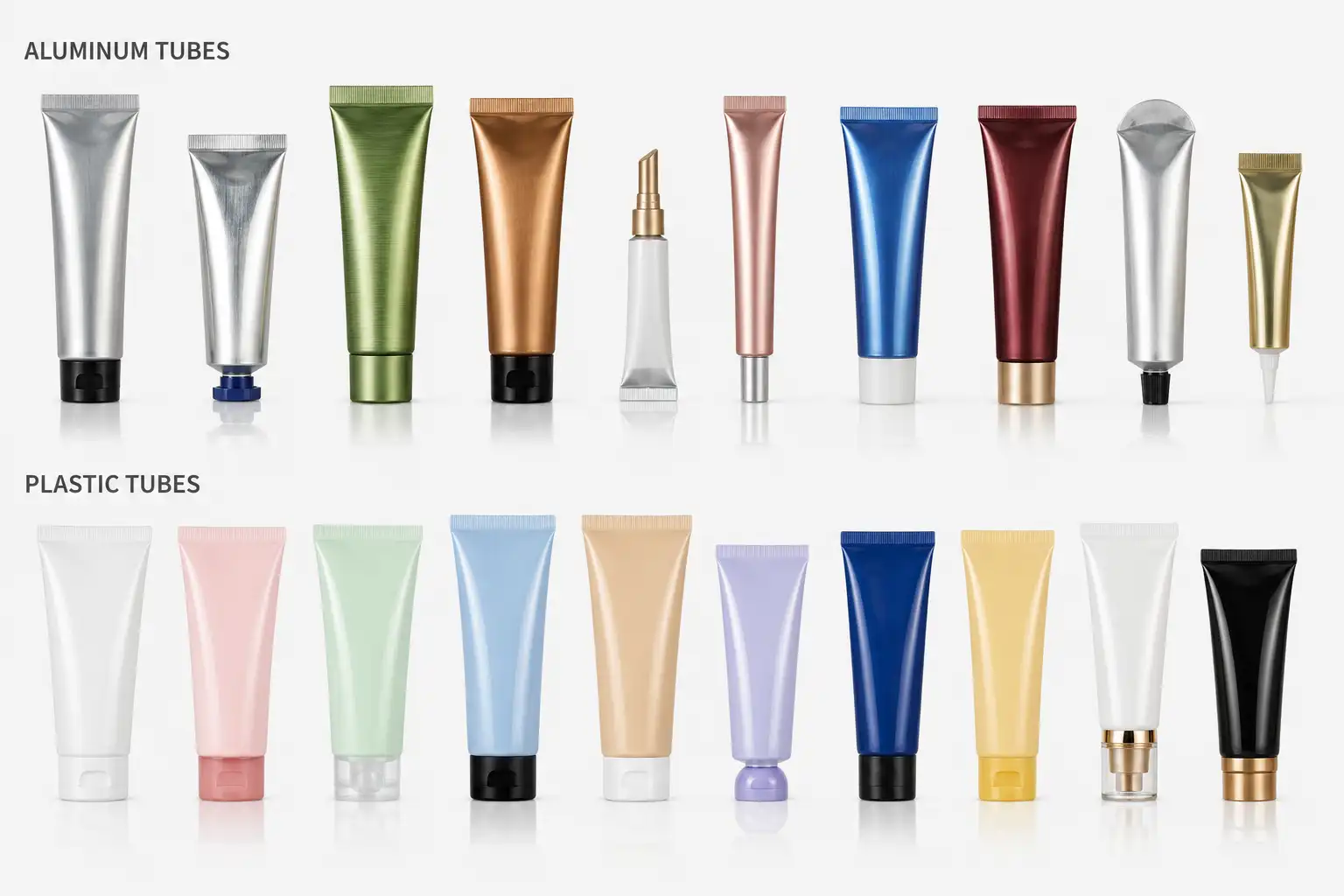
Plastic, laminated, and aluminum tubes may require different sealing arrangements. Tube diameter and length also matter when one machine is expected to handle several product sizes. Your quotation should make clear:
- Which tube specifications are included
- Which formats require additional change parts
- How format adjustment is carried out
- Whether future tube sizes can be accommodated
If your packaging team is still testing different tube suppliers or designs, mention this at the quotation stage. A machine selected around one sample tube can become restrictive when the packaging specification changes.
Calculate Effective Production Capacity, Not Only Machine Speed
A machine rated at 60 tubes/min does not mean your factory will produce 60 finished tubes every minute of the working day.
If the machine runs at 60 tubes/min, an uninterrupted 8-hour shift would theoretically produce: 60 × 60 × 8 = 28,800 tubes
But suppose the same shift includes:
- 40 minutes of changeover
- 30 minutes of cleaning
- 20 minutes of adjustment and material replenishment
That leaves 7 hours of effective running time: 60 × 60 × 7 = 25,200 tubes
The difference is 3,600 tubes per shift.
That is why a machine with a slightly lower rated speed can sometimes deliver similar—or better—commercial output if it requires less downtime between products.
For an OEM factory running many short batches, this calculation is much more useful than comparing the largest number on two quotation sheets.
Which Automation Level Fits Your Cosmetic Production?
A small cosmetic brand launching a few products may value manageable investment and flexible operation. An established OEM factory with stable contracts may benefit much more from automatic tube loading, filling, and sealing.
| Production model | Main consideration |
|---|---|
| New or small-scale brand | Investment level and flexibility |
| Multi-SKU OEM/ODM factory | Changeover, format flexibility, labor efficiency |
| Stable high-volume production | Continuous output and automation |
| Expanding manufacturer | Current capacity and future scalability |
There is also a middle ground. If demand is growing but order volumes are still unpredictable, buying the largest available automatic line can leave capacity unused.
On the other hand, equipment that is too limited can become a bottleneck when new customers or products arrive.
What Should You Test Before Making Decision?
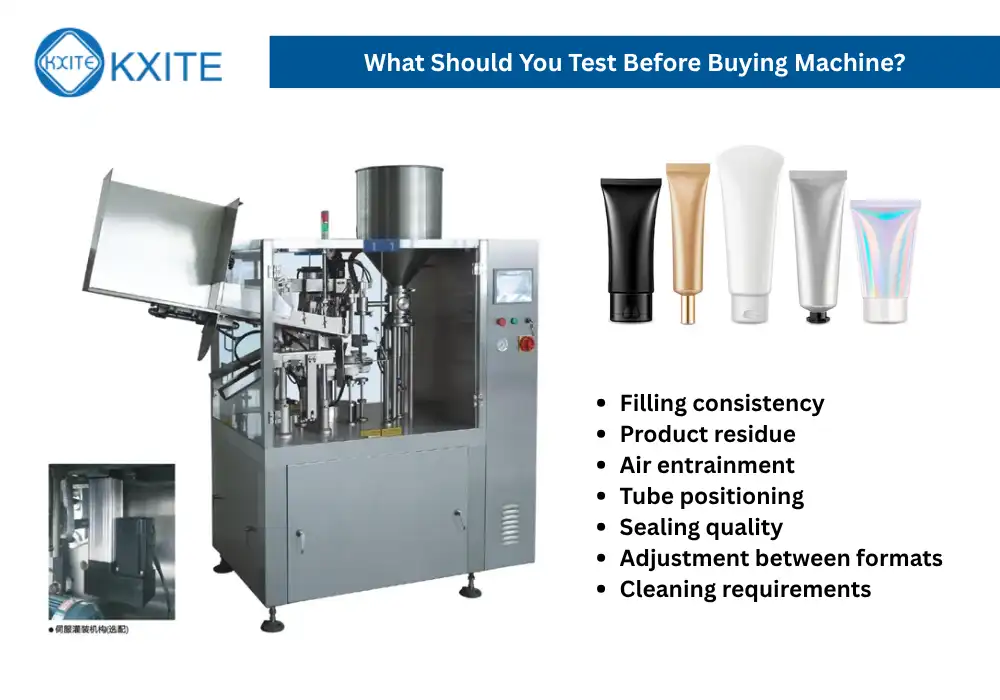
A machine demonstration is much more useful when it reflects your production rather than the supplier's easiest product. Ask the supplier to test: Your cream + your tube + your filling volume. For a multi-product factory, test at least two representative formulations if their viscosity or filling behavior is significantly different.
During the trial, check:
- Filling consistency
- Product residue
- Air entrainment
- Tube positioning
- Sealing quality
- Adjustment between formats
- Cleaning requirements
For OEM production, run two representative SKUs consecutively if possible. This reveals how the equipment behaves when the production schedule changes, not just how it performs during one uninterrupted run.
Look at Total Production Cost, Not Machine Price Alone
A lower purchase price does not necessarily mean a lower production cost. Imagine two machines with similar specifications.
Machine A: 60 tubes/min, but each major changeover takes 30 minutes.
Machine B: 55 tubes/min, with a 15-minute changeover.
If your factory makes eight changeovers in a day, Machine A spends an additional: 15 × 8 = 120 minutes on changeover.
That is two hours of potential production time lost each day.
For a single-SKU factory running continuously, the 60 tubes/min machine may be the better choice. For a multi-SKU OEM factory, the 55 tubes/min machine could deliver more usable production time. When comparing quotations, include:
- Labor
- Product waste
- Changeover downtime
- Spare parts
- Maintenance
- Technical support
- Future format requirements
The purchase price is only one part of the calculation.
Questions Worth Asking Your Filling Machine Supplier
A useful quotation should give you enough information to compare the machines on equal terms.
- Product compatibility
- Production range
- Changeover
- Testing
- Future products
- After-sales support
For an OEM/ODM project, ask the supplier to evaluate the machine against your production mix, rather than approving the configuration from one product sample.
For More Readings:
Engineer Tips: Tube Filling Machines Maintenance Before Downtime Hits
Tube Filling Machine Selection Checklist
Daily Operation Checklist for Tube Filling Machines(PDF Download)
Tube Compatibility in Filling Machines(Free PDF Checklist)
FAQ About Cosmetic Cream Filling Production
What happens if the cream viscosity changes between batches?
Changes in viscosity can affect product flow and dosing behavior. If your formulation has a defined operating temperature or viscosity range, include that information during machine testing rather than testing only one ideal batch.
Is a higher filling speed always better?
No. Rated speed only describes the machine under specified running conditions. Changeover, cleaning, adjustment, and material handling determine how much finished product you actually obtain during a shift.
How should two machines with similar specifications be compared?
Run the same cream, tube, and filling volume on both machines if possible. Then compare filling consistency, changeover procedure, cleaning time, operator involvement, and finished-tube quality.
What if an OEM customer changes the tube after the machine is ordered?
That depends on how closely the new tube matches the original specification. Diameter, length, material, and sealing requirements should be confirmed with the machine supplier before changing packaging.
Should future products influence the machine configuration?
Yes, when the expected product range is reasonably clear. You do not need to purchase every possible option, but the initial machine should not unnecessarily restrict foreseeable tube sizes or filling volumes.
Do you need to test every SKU?
No. Representative products are normally more useful. Select products that cover the widest differences in viscosity, filling volume, and packaging format, then use the results to evaluate the rest of the range.
Conclusions
A cosmetic cream filling machine works as part of a production system. The cream, dosing method, tube, sealing process, changeover procedure, and production schedule all affect the final result. For a single high-volume cream, continuous output may be the priority. For an OEM factory producing many short batches, changeover time and material loss can have a larger effect on profitability. A growing skincare manufacturer may need equipment that handles today's products without limiting future tube sizes or filling volumes.
If you are evaluating a cosmetic cream filling machine, provide the cream formulation, filling volumes, tube specifications, production target, and representative samples. With those details, the filling and sealing configuration can be evaluated against your actual production requirements rather than a generic machine specification.