What is blister packaging in pharmaceuticals?
Blister packaging in the pharmaceutical industry is a unit-dose packaging system where each tablet or capsule is sealed individually between a formed cavity (plastic or aluminum) and a lidding material, typically aluminum foil.
It is designed to:
- Protect drug stability
- Ensure accurate dosing
- Prevent contamination
- Enable tamper evidence
- Support regulatory compliance
This packaging format is widely used for solid oral dosage forms such as tablets and capsules.
Why is blister packaging used in pharmaceutical manufacturing?
Blister packaging is used because it provides multi-layer protection and regulatory alignment for sensitive drug products.
Key reasons include:
- Moisture and oxygen barrier protection to prevent API degradation
- Light protection for photosensitive drugs
- Unit-dose accuracy to reduce medication errors
- Tamper-evident structure for supply chain safety
- Compatibility with GMP and serialization systems for regulatory compliance
These functions make blister packaging one of the most widely accepted pharmaceutical packaging formats globally.
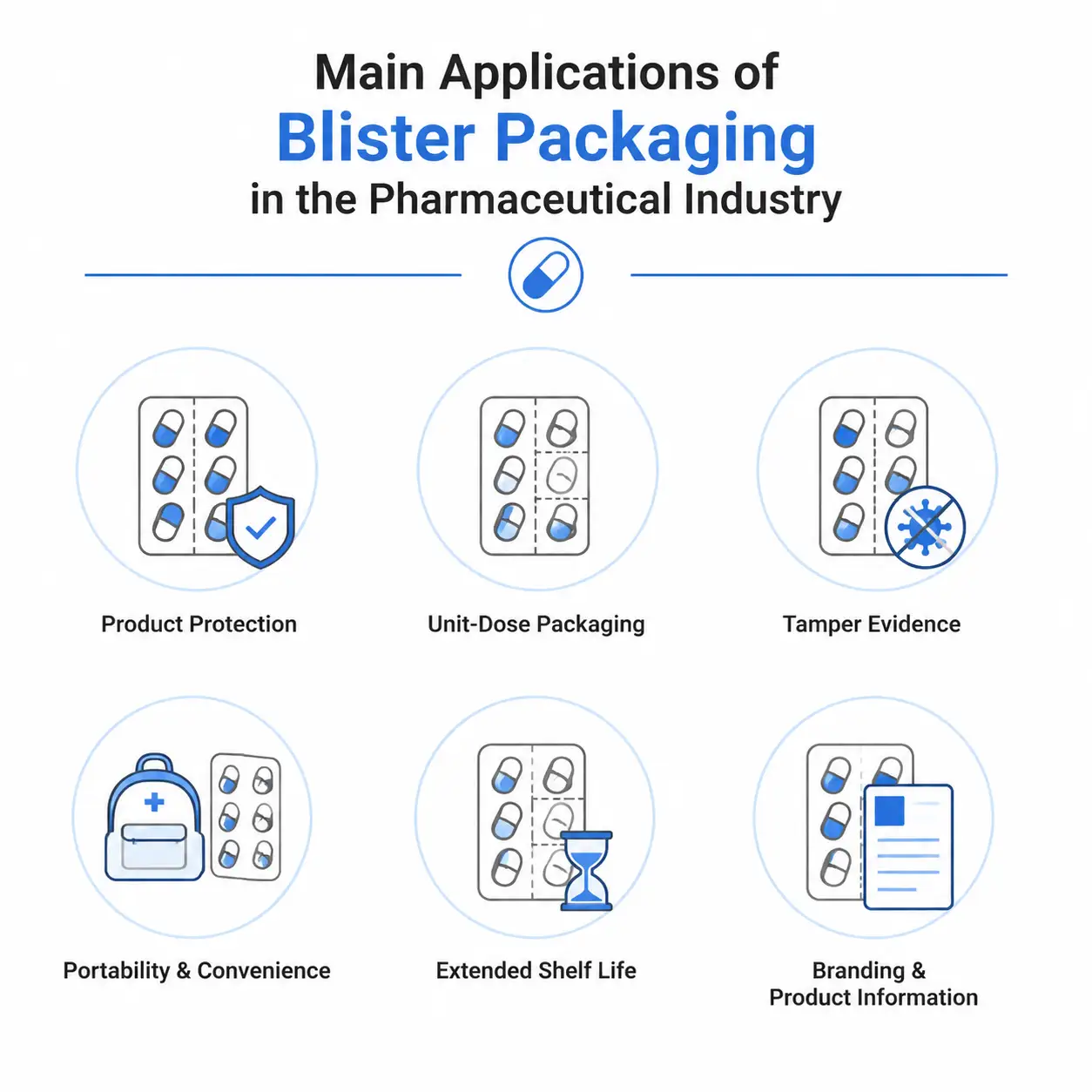
What are the main applications of blister packaging in the pharmaceutical industry?
1. Oral solid dosage drugs (primary application)
Blister packaging is most commonly used for:
- Tablets
- Capsules
- Soft gels
It is preferred because it supports:
- High-speed automated production
- Stable long-term storage
- Low unit packaging cost
2. Over-the-counter (OTC) drugs
In OTC drug manufacturing, blister packaging is used for:
- Pain relief tablets
- Cold and flu medications
- Digestive health products
Key characteristics:
- Retail-friendly packaging format
- Small-dose consumer packs
- Cost-efficient mass production
- Strong shelf visibility
3. Nutraceutical and dietary supplements
Blister packaging is widely used for:
- Vitamins
- Minerals
- Herbal supplements
- Probiotics
Its function in this segment focuses on:
- Moisture protection for sensitive ingredients
- Shelf-life extension
- Product integrity during transportation
- Consumer-friendly single-dose presentation
4. Clinical trials and specialty pharmaceuticals
Blister packaging supports clinical research by enabling:
- Precise dose tracking per patient
- Improved compliance monitoring
- Controlled randomization packaging
- Reduced handling contamination risk
It is often used in clinical trial supply chain packaging systems.
5. Diagnostic and medical device components
Blister-style packaging is also used for:
- Single-use diagnostic kits
- Test strips
- Sterile medical components
Its main role is maintaining:
- Sterility
- Traceability
- Contamination control
What are the main types of pharmaceutical blister packaging?
Thermoformed blister packaging
Uses plastic forming films such as PVC, PET, or PVDC-coated materials.
- Transparent cavity
- Cost-efficient
- Suitable for high-volume production
Cold-formed (Alu-Alu) blister packaging
Uses aluminum-based laminates for both forming and lidding.
- Maximum barrier protection
- No moisture or oxygen permeability
- Used for highly sensitive drugs
Tropical blister packaging
Designed for high-humidity environments.
- Enhanced moisture resistance
- Common in Asia, Africa, and Latin America
Pharmaceutical Blister Packaging Materials
Forming films:
- PVC (basic barrier, low cost)
- PVDC-coated PVC (improved moisture resistance)
- PET / COC (high clarity and recyclability)
Lidding materials:
- Aluminum foil (highest barrier performance)
- Laminated foil structures (combined barrier + printability)
Material selection directly impacts:
- Drug shelf life
- Stability of active pharmaceutical ingredients (API)
- Regulatory approval pathways
What is the manufacturing process of blister packaging?
The pharmaceutical blister packaging process typically includes:
- Material selection (forming film + lidding foil)
- Thermoforming or cold forming of cavities
- Product filling (tablets or capsules)
- Heat sealing of lidding material
- Printing (batch number, expiry date)
- Cutting into unit-dose packs
This process is usually integrated into automated GMP-compliant production lines.
What are the benefits of blister packaging in pharmaceuticals?
Blister packaging provides four major functional systems:
Product protection
- Moisture barrier
- Oxygen protection
- Light shielding
Patient safety
- Unit-dose control
- Tamper evidence
- Reduced contamination risk
Regulatory compliance
- GMP alignment
- Serialization support
- Traceability in supply chains
Commercial efficiency
- High-speed production
- Retail-friendly packaging
- Cost-effective scaling
What are the limitations of blister packaging?
Despite its advantages, blister packaging has limitations:
- Difficult recycling due to multi-layer materials
- Higher tooling cost for custom molds
- Accessibility issues for elderly patients
- Environmental concerns regarding plastic usage
Industry trends are addressing these issues through:
- Mono-material recyclable blisters
- Paper-based blister structures
- Sustainable barrier coatings
What are the future trends in pharmaceutical blister packaging?
Key development directions include:
- Sustainable and recyclable blister materials
- Smart packaging with QR codes and digital tracking
- Integration with serialization and IoT systems
- High-barrier eco-friendly films
- AI-driven pharmaceutical packaging line optimization
Summary
Blister packaging in the pharmaceutical industry is a critical drug delivery packaging system that ensures product stability, patient safety, and regulatory compliance. Its applications span prescription drugs, OTC products, nutraceuticals, clinical trials, and diagnostic kits, making it one of the most important packaging technologies in modern pharmaceutical manufacturing.