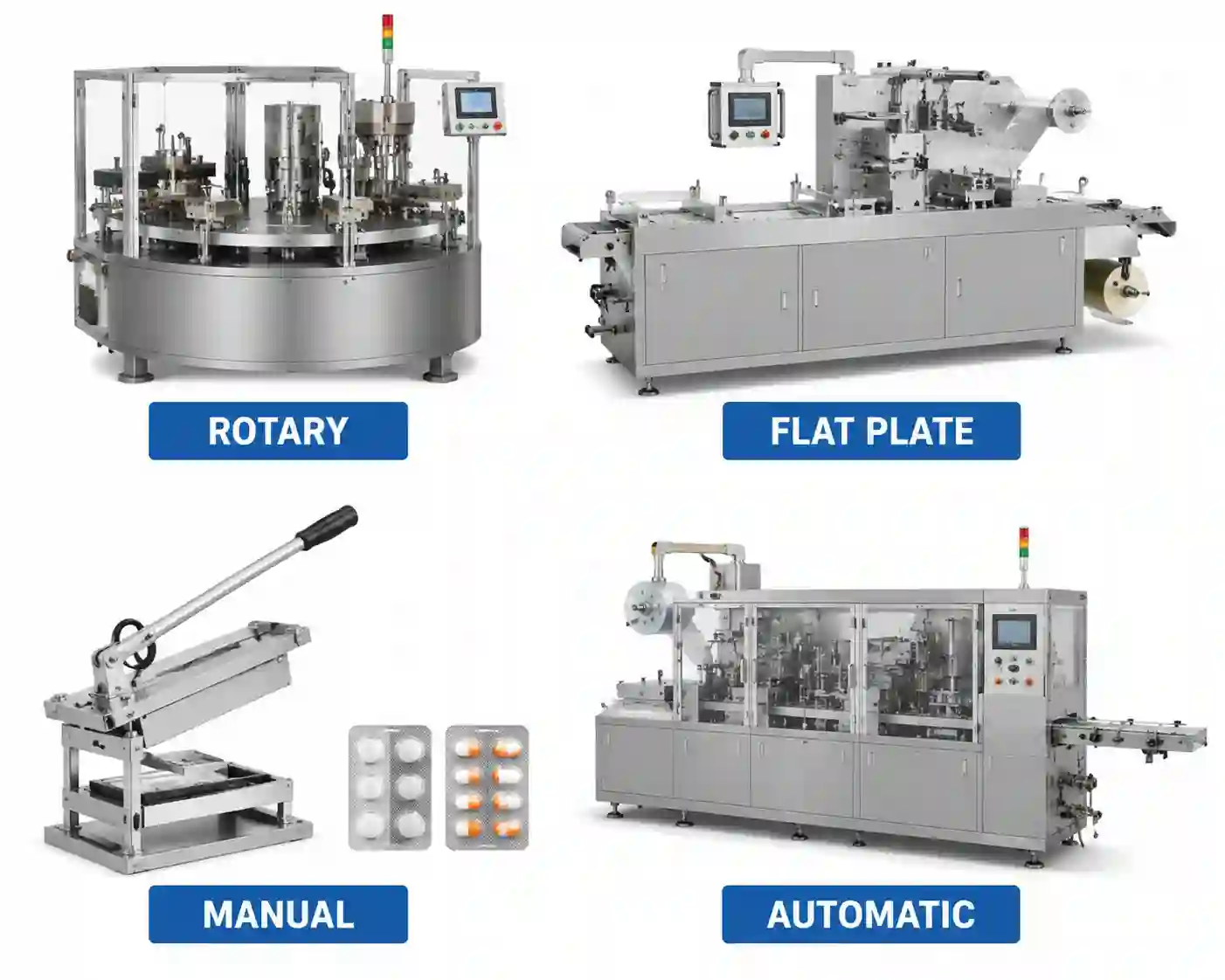
How Blister Packaging Works in Pharmaceutical Production
Quick Answer
Pharmaceutical blister packaging works by forming cavities from plastic or aluminum material, filling tablets or capsules automatically, sealing them with lidding foil, and cutting them into finished blister packs. The process is widely used because it improves moisture protection, dosing accuracy, product stability, and production efficiency.
What Is Blister Packaging in Pharmaceuticals?
Blister packaging is one of the most common packaging methods used for tablets and capsules in pharmaceutical production.
A typical blister pack consists of:
-
A formed cavity layer
-
lidding aluminum foil
-
individually sealed doses
Compared with bottle packaging, blister packaging provides:
-
better product protection
-
unit-dose control
-
easier traceability
-
reduced contamination risk
-
improved patient compliance
That is why it is widely used for both OTC and prescription drugs.
How the Pharmaceutical Blister Packaging Process Works
Although blister packaging lines can vary by product and material, the production workflow usually follows the same core steps.
Step 1 — Packaging Material Feeding
The process starts with feeding packaging material into the blister machine.
Common materials include:
| Material | Typical Application |
|---|---|
| PVC | Standard pharmaceutical blister packs |
| PVDC | Higher moisture barrier |
| Alu-PVC | Common tablet and capsule packaging |
| Alu-Alu | High-barrier pharmaceutical packaging |
Material selection directly affects:
-
moisture protection
-
forming quality
-
production speed
-
packaging cost
For moisture-sensitive drugs, Alu-Alu is often preferred because of its superior barrier performance.
Step 2 — Blister Cavity Forming
The machine forms cavities that hold tablets or capsules.
There are two main forming methods.
| Forming Type | Material | Characteristics |
|---|---|---|
| Thermoforming | PVC-based materials | Faster, transparent, easier forming |
| Cold Forming | Alu-Alu | Higher barrier, slower production |
Thermoforming uses heat to soften plastic film before forming cavities.
Cold forming uses mechanical pressure to shape aluminum without heating.
In actual production, forming quality is critical because uneven cavities can later cause:
-
poor sealing
-
tablet damage
-
foil wrinkling
-
rejection during inspection
Step 3 — Tablet or Capsule Feeding
After cavity forming, the feeding system automatically places products into each blister pocket.
Depending on the product, the machine may use:
-
brush feeding
-
vibration feeding
-
channel feeding
-
servo-controlled feeding systems
At higher speeds, feeding accuracy becomes one of the most important factors in blister packaging stability.
Poor synchronization often leads to:
-
empty pockets
-
broken tablets
-
double feeding
-
product misalignment
This is one of the most common issues in pharmaceutical blister production.
Step 4 — Heat Sealing
After filling, the blister is sealed with aluminum lidding foil using controlled heat and pressure.
Sealing quality directly affects:
-
shelf life
-
moisture protection
-
product stability
In pharmaceutical production, poor sealing is one of the main causes of packaging failure.
Common sealing problems include:
-
incomplete sealing
-
channel leaks
-
foil wrinkles
-
sealing layer damage
In many cases, the problem is not the material itself, but unstable sealing temperature or pressure control during high-speed operation.
Step 5 — Batch Coding and Embossing
The machine prints:
-
batch numbers
-
production dates
-
expiration dates
onto the blister foil.
This step is important for pharmaceutical traceability and regulatory compliance.
Some pharmaceutical lines also integrate vision inspection systems to verify print quality automatically.
Step 6 — Punching and Cutting
The sealed blister sheet is punched and cut into final blister cards.
The cutting process must maintain:
-
accurate registration
-
clean edges
-
consistent blister dimensions
At higher machine speeds, registration deviation can cause cutting misalignment or damaged blister packs.
Thermoforming vs Cold Forming Blister Packaging
One of the most common questions in pharmaceutical packaging is the difference between thermoforming and cold forming.
| Factor | Thermoforming | Cold Forming |
|---|---|---|
| Material | PVC/PVDC | Alu-Alu |
| Production Speed | Faster | Slower |
| Barrier Protection | Moderate | Excellent |
| Product Visibility | Transparent | Opaque |
| Forming Difficulty | Easier | Higher |
| Operating Cost | Lower | Higher |
Thermoforming is commonly used for standard pharmaceutical products because it supports faster production and lower packaging cost.
Cold forming is mainly used for moisture-sensitive or high-value drugs requiring maximum protection.
Why Pharmaceutical Companies Use Blister Packaging
Pharmaceutical manufacturers choose blister packaging because it balances:
-
product protection
-
production automation
-
dosing accuracy
-
packaging efficiency
Compared with bottle packaging, blister packaging also reduces cross-contamination risk because each dose is individually sealed.
For export pharmaceutical products, blister packaging often provides better stability during transportation and storage.
Common Problems in Blister Packaging Production
In actual pharmaceutical manufacturing, most production issues happen in four areas.
Poor Sealing
Usually caused by:
-
unstable sealing temperature
-
insufficient pressure
-
material mismatch
Poor sealing can reduce shelf life and moisture protection.
Uneven Blister Forming
Common causes include:
-
incorrect forming temperature
-
insufficient forming pressure
-
material thickness variation
This problem is more noticeable in deep-pocket blister designs.
Feeding Errors
At high speed, poor feeding synchronization may cause:
-
missing tablets
-
broken capsules
-
double feeding
Servo feeding systems are often used to improve stability.
Registration Misalignment
Registration errors usually happen when machine speed increases beyond stable synchronization between forming, sealing, and punching stations.
This directly affects blister appearance and cutting accuracy.
Typical Pharmaceutical Blister Packaging Line
A complete pharmaceutical blister packaging line may include:
| Equipment | Function |
|---|---|
| Blister Packaging Machine | Forming, feeding, sealing |
| Cartoning Machine | Carton packaging |
| Checkweigher | Weight inspection |
| Vision Inspection System | Defect detection |
| Case Packer | Secondary packaging |
Many pharmaceutical factories integrate these systems into fully automatic production lines to improve efficiency and reduce labor costs.
FAQ
What is blister packaging used for in pharmaceuticals?
Blister packaging is mainly used for tablets and capsules to improve product protection, dosing accuracy, and shelf life.
Why is Alu-Alu used in pharmaceutical packaging?
Alu-Alu provides stronger protection against moisture, oxygen, and light, making it suitable for sensitive pharmaceutical products.
What causes blister sealing failure?
Common causes include unstable sealing temperature, insufficient pressure, material incompatibility, and machine synchronization problems.
Can one blister machine run both Alu-PVC and Alu-Alu?
Some pharmaceutical blister machines support both materials with different tooling and parameter settings.
What is the difference between blister packaging and strip packaging?
Blister packaging uses formed cavities to hold products individually, while strip packaging seals products between two flat layers of film or foil.
Looking for a Pharmaceutical Blister Packaging Solution?
At Packing Machine Inc., we provide pharmaceutical blister packaging machines for tablets, capsules, and integrated production lines.
Whether you need standard Alu-PVC packaging or high-barrier Alu-Alu solutions, our team can help you select suitable equipment based on your product and production requirements.
???? Contact us for machine recommendations, technical consultation, and quotation support.