GMP Compliance in Ointment Packaging: Key Features to Look for in a Tube Filler
For QA/QC managers in the pharmaceutical industry, the packaging line is often the most scrutinized area during an audit. Unlike solid dosage forms, semi-solids like ointments and creams are highly susceptible to cross-contamination and microbial growth.
When procuring a GMP standard tube filling machine, the focus shouldn't just be on speed; it must be on hygiene, cleanability, and material safety. If the machine cannot be cleaned to a validated standard, it cannot be used.
At Wenzhou Kxite Machinery, we understand the rigor of pharmaceutical ointment filling regulations. That is why our Tube Filling Sealing Machines are engineered specifically to meet FDA and EU GMP requirements.
1. Material Safety: Why 316L is Non-Negotiable
In food packaging, 304 stainless steel is often sufficient. In pharma, it is a compliance risk. Active Pharmaceutical Ingredients (APIs) in ointments can be corrosive or reactive.
The Kxite NF-120 ensures that all parts coming into contact with the product are manufactured from high-grade 316L stainless steel contact parts. This low-carbon alloy offers superior resistance to corrosion and pitting, ensuring that no metal leaching occurs, maintaining the chemical purity of your drug product.
2. Contamination Control: The "No Oiling" Advantage
One of the biggest nightmares for a Quality Manager is finding "black spots" (grease) on a white tube. Traditional mechanical machines require frequent lubrication of the transmission shaft, which sits directly above the open tubes. Gravity makes contamination inevitable.
The Kxite Solution: We utilize advanced German wear-resistant sliding bearings throughout the filling station. These high-tech components are self-lubricating and require no oiling. By eliminating liquid lubricants in the filling zone, we eliminate the primary source of physical contamination.
3. Cleanability: Design Without Dead Angles
To facilitate a validatable cleaning process (whether manual or Clean-in-place (CIP) tube filler systems), the machine's geometry matters.
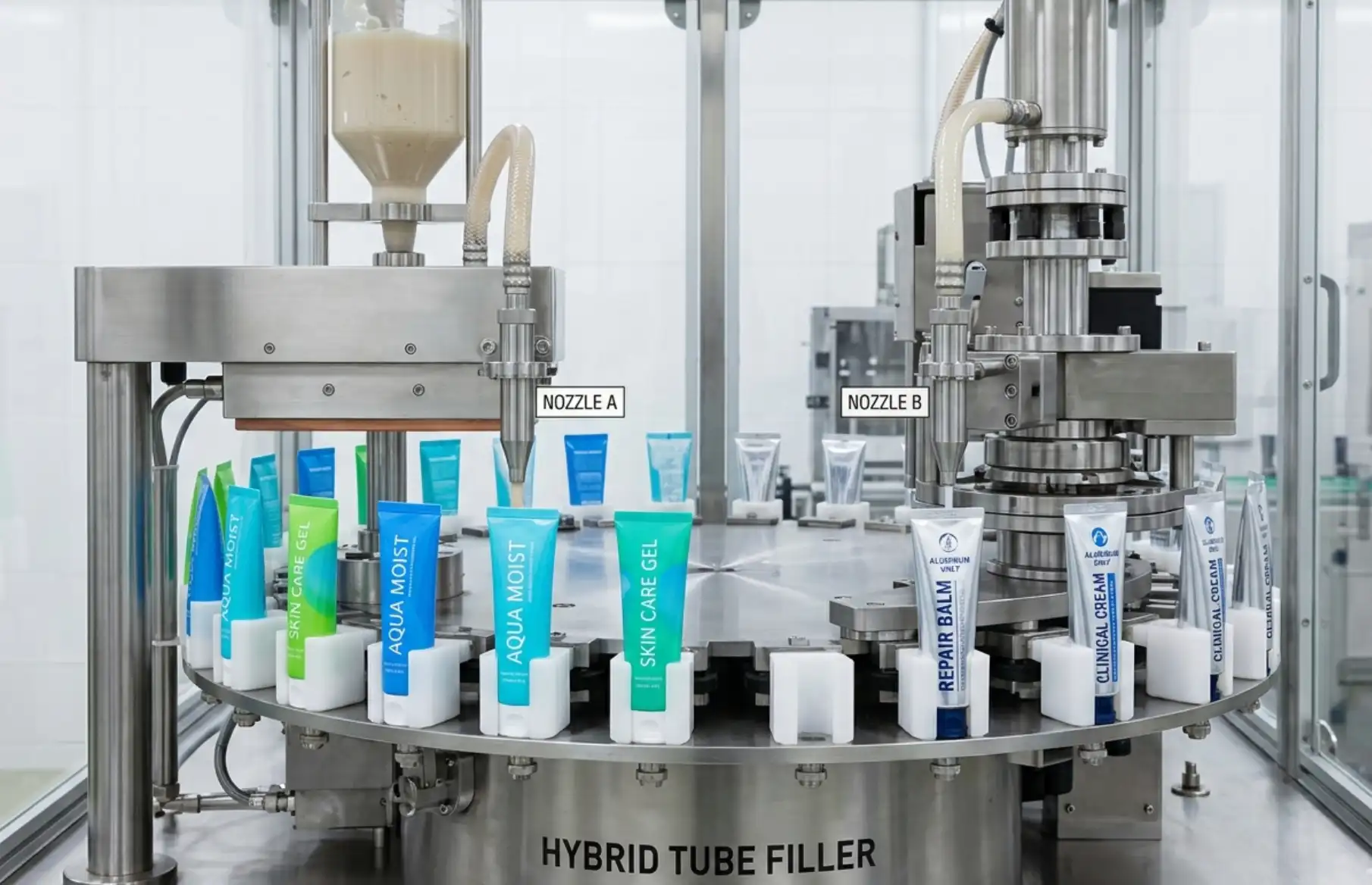
Our hopper and filling nozzle assembly feature quick-release sanitary clamps (tri-clamp fittings) and polished surfaces with a roughness average (Ra) of < 0.4µm. There are no sharp corners or "dead angles" where product residue can hide and breed bacteria. Furthermore, the machine works within a fully enclosed safety cabinet to isolate the product from the operator environment.
4. GMP Audit Checklist: The Kxite NF-120 Advantage
Use this comparison table to evaluate if your current or prospective equipment meets modern compliance standards.
| GMP Requirement | Common Industry Issue | Kxite NF-120 Solution |
|---|---|---|
| Material Compatibility | Standard SS304 may react with acidic/alkaline APIs. | 316L Stainless Steel for all contact parts (Hopper, Piston, Nozzle). |
| Cross-Contamination Prevention | Grease from drive shafts dripping into open tubes. | German Oil-less Sliding Bearings (Self-lubricating, zero grease risk). |
| Environmental Protection | Open design allows dust/particulate entry. | Fully Enclosed Safety Frame with tempered glass doors (Optional Laminar Flow). |
| Cleaning Validation | Threaded joints trap residue (Dead Angles). | Sanitary Tri-Clamp Connections for tool-free disassembly and full visual inspection. |
Conclusion
Compliance is not an optional add-on; it is the foundation of pharmaceutical manufacturing. Investing in a machine that is "cheap" but non-compliant is the most expensive mistake a factory can make.
The Kxite NF-120 is designed to give Quality Managers peace of mind. With its oil-free mechanics and pharmaceutical-grade materials, it passes the strictest audits with ease.
Preparing for an FDA or GMP audit?
Download our machine specification sheet (URS) to see the full list of compliance features.