Alu-Alu (Cold Form) vs. Alu-PVC: Choosing the Right Barrier for Moisture-Sensitive Drugs
For pharmaceutical R&D teams and packaging engineers, failing a stability test is a nightmare. When developing formulations for highly hygroscopic drugs—such as effervescent tablets or certain antibiotics—the choice of primary packaging is not just about aesthetics; it’s a matter of chemical survival.
The debate often comes down to two contenders: standard Alu-PVC (Thermoforming) versus high-barrier Alu-Alu (Cold Forming). While PVC is cost-effective, it often falls short for sensitive molecules. Conversely, Alu-Alu offers the ultimate shield but demands specific machinery capabilities.
At Wenzhou Kxite Machinery, we help manufacturers navigate this choice. Our versatile Blister Packing Machines are engineered to handle both standard PVC and high-barrier Cold Form materials efficiently.
1. Alu-PVC (Thermoforming): The Industry Standard
Alu-PVC is the most common blister packaging format globally. It consists of a forming film (PVC) and a lidding foil (Aluminum). The PVC is heated until pliable and then formed into cavities using air pressure or mechanical plugs.
Pros & Cons
- Pros: Low material cost, clear visibility of the product (unless opaque PVC is used), and compatibility with standard thermoforming machines.
- Cons: Limited barrier protection. Standard PVC allows a measurable amount of moisture and oxygen to permeate over time, making it unsuitable for Zone IV climatic conditions (hot and humid) for sensitive drugs.
2. Alu-Alu (Cold Forming): The Ultimate Barrier
For drugs that degrade rapidly in the presence of moisture or light, Cold forming blister packaging advantages are unmatched. Also known as CFF (Cold Form Foil), this structure typically sandwiches aluminum foil between layers of OPA (Nylon) and PVC.
How It Works
Unlike PVC, aluminum cannot be heated and stretched. Instead, it is mechanically stamped or "cold formed" into shape using high-pressure pins. This creates a cavity that is essentially a complete aluminum cocoon around the tablet.
Key Benefits
- Zero Permeability: Because the barrier is solid metal, the Water Vapor Transmission Rate (WVTR) and Oxygen Transmission Rate (OTR) are virtually zero.
- Light Protection: Provides 100% protection against UV light.
- Extended Shelf Life: Significantly extends the expiration date of moisture barrier packaging for tablets.
3. Barrier Performance: PVC vs. PVDC vs. Alu-Alu
To help you select the right material for your stability trials, we’ve compared the three most common forming films. Use this data to determine if you need a machine with Alu-Alu Cold Forming capability.
| Material Type | WVTR (Water Vapor) | OTR (Oxygen) | Cost Level | Machine Requirement |
|---|---|---|---|---|
| Standard PVC | High (Poor Barrier) | High | $ (Low) | Standard Thermoformer |
| PVDC Coated PVC | Medium (Improved) | Medium | $$ (Medium) | Standard Thermoformer |
| Alu-Alu (Cold Form) | ~ 0 (Excellent) | ~ 0 (Excellent) | $$$ (High) | Cold Forming Capability (High Pressure) |
*Note: WVTR values vary by film thickness, but Alu-Alu consistently outperforms polymers.
4. Machine Compatibility: Running Alu-Alu on Kxite Equipment
Choosing Alu-Alu materials requires machinery that can handle the mechanical stress of cold forming without tearing the foil.
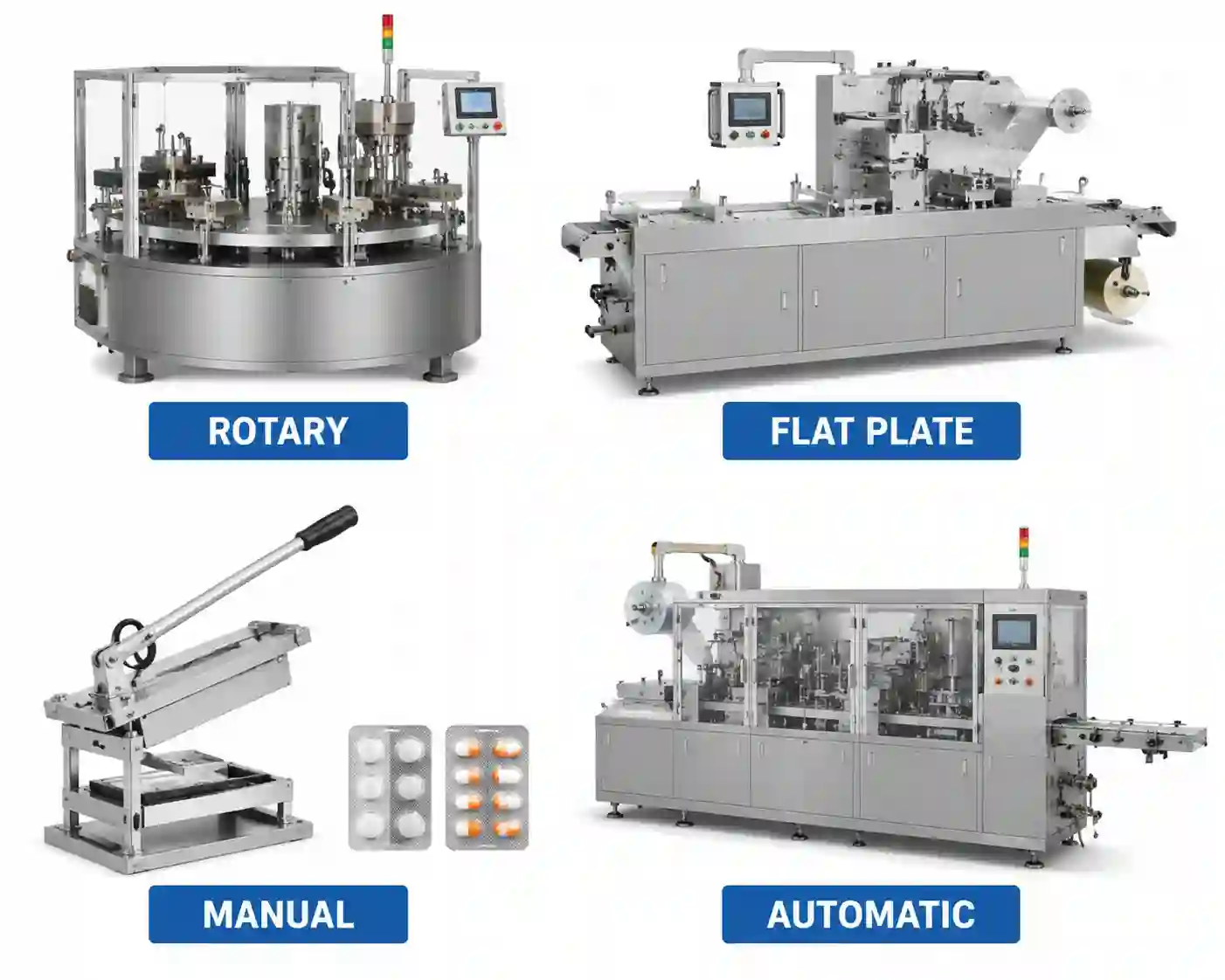
For High-Speed Production: Rotary Technology
Many manufacturers mistakenly believe that Cold Forming is slow. However, our advanced Rotary Blister Machines are engineered with robust servo-drive systems capable of handling Alu-Alu materials at high speeds. The rotary forming station applies continuous, even pressure, ensuring defect-free cavities even with tougher laminates.
For Deep Draw & Flexibility: Flat-Plate Technology
If your product requires an unusually deep cavity or you run frequent small batches, our Flat-Plate Blister Machines (DPP Series) are an excellent alternative, offering precise control over the forming depth and quick mold changeovers.
Conclusion
If your drug is robust, Alu-PVC remains the cost-effective champion. But for moisture-sensitive APIs, Alu-Alu is the non-negotiable insurance policy for your product's shelf life.
At Kxite Machinery, we ensure your production line is ready for any material. Whether you need to run standard PVC or upgrade to high-barrier Cold Form foil, our experts can configure the perfect machine for your needs.
Planning a new line for hygroscopic drugs?
Consult Kxite’s packaging experts to discuss your material and machine compatibility.