Integration of Blister Machine with Cartoning Machine: Optimizing Your Pharmaceutical Packaging Line
Introduction: Why Integration Matters
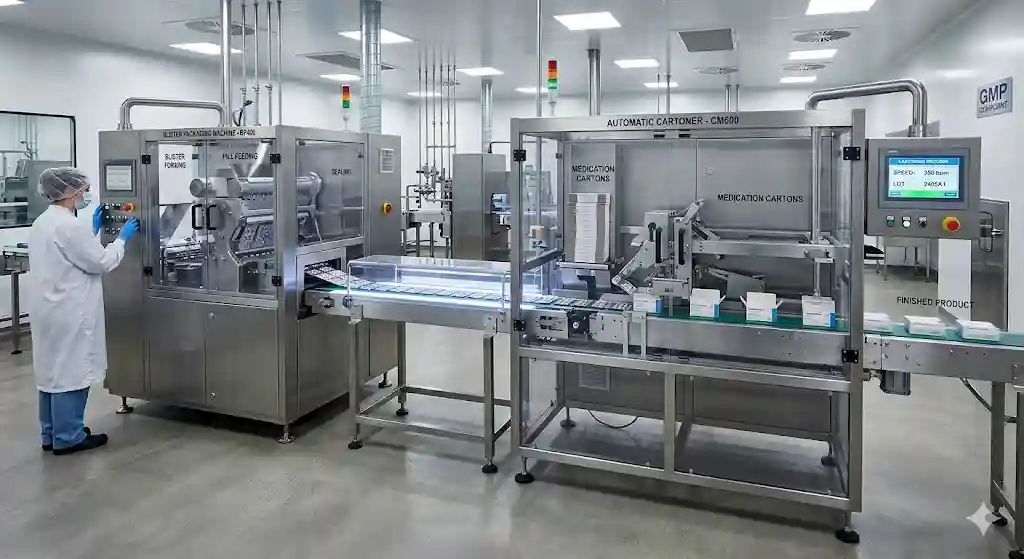
In modern pharmaceutical production, a blister packaging machine rarely operates in isolation. Even a high-precision blister machine can underperform if the downstream cartoning line is not properly synchronized. Integration is not just connecting two machines—it’s ensuring that the entire packaging line runs smoothly, efficiently, and consistently. From tablets or capsules exiting the blister station to being packed into cartons, every step affects output quality, speed, and compliance.
From our on-site experience : Many quality issues, like misaligned packs or jams in cartoning, are rooted in poor machine integration rather than the machines themselves.
Key Components of Integration
Mechanical Synchronization
- The blister machine and cartoning machine unit must operate in perfect timing.
- Sensors detect the position of each blister pack, triggering carton pick-up or folding.
- Mismatch in speed or timing can lead to damaged packs or missed fills.
Control Systems and Automation
- Modern lines rely on PLCs or SCADA systems to coordinate blister and cartoning machines.
- Integration ensures data communication for speed adjustment, error detection, and line stopping.
- Real-time monitoring reduces downtime and product loss.
Product Handling and Transfer
- Gentle transfer mechanisms (conveyors, pushers, or robotics) prevent packs from bouncing or misaligning.
- Proper alignment ensures cartons are filled without missing products.
- High-speed lines are particularly sensitive to vibration and inertia during transfer.
Inspection and Quality Control
- Inline inspection units (weight check, visual inspection, serialization) are integrated into the line.
- Any rejected packs are automatically separated without stopping the entire line.
- Integration with cartoning ensures defective packs never reach downstream processes.
Common Challenges During Integration
- Line Speed Mismatch: Blister machine might produce faster than the carton unit can handle.
- Pack Misalignment: Misfeeds at the transfer station can lead to damaged blisters or cartons.
- Downtime Propagation: A jam in the cartoning machine can stop the entire blister line if not properly buffered.
- Material Handling Conflicts: Blister packs of varying sizes or shapes require flexible integration mechanisms.
In real practice, resolving these challenges often requires a combination of mechanical adjustments, control system calibration, and operator training.
Best Practices for Seamless Integration
- Use Flexible Transfer Systems: Conveyors with adjustable speed or robotics arms reduce misalignment risk.
- Synchronize Speeds with Real-Time Feedback: Sensors and control software allow the cartoning machine to dynamically match blister output.
- Standardize Pack Formats: Keeping blister sizes and carton dimensions consistent simplifies integration.
- Include Buffering and Error Handling: Small accumulators between machines prevent full line stoppages during temporary jams.
- Routine Line Validation: Test the entire system during ramp-up periods, not just individual machines.
Applications: Who Benefits Most from Integration
- Pharmaceutical tablet and capsule manufacturers requiring unit-dose packaging
- OTC drug production lines with high-speed cartoning
- Nutraceuticals and supplements where product integrity and traceability are critica
Proper integration reduces downtime, improves efficiency, and ensures compliance with cGMP and serialization regulations.
FAQ
Q1: Can a blister machine run independently of a cartoning unit?
A: Yes, but long-term efficiency and output quality are compromised. Integration ensures smooth downstream packaging.
Q2: What’s the biggest risk if integration is poor?
A: Misaligned packs, jams, and potential product damage—impacting both yield and regulatory compliance.
Q3: How do engineers optimize integration?
A: Through synchronization of speed, mechanical alignment, transfer systems, and control system calibration
Related contents may you interesting: