Blister Packaging Machine Cost: What Buyers Should Know
- Downtime during continuous production
- Unstable sealing at higher speeds
- Frequent tooling adjustments
- Foil feeding issues
- Slow format changeovers
- Downstream synchronization problems
From an engineering perspective, two blister packaging machines with similar output speeds may perform very differently after several months of real production. This is why experienced pharmaceutical manufacturers rarely evaluate blister machine cost based on the initial quotation alone.
1. Machine Structure Is Usually the First Major Cost Difference
Different blister machine structures create very different manufacturing capabilities, maintenance requirements, and long-term operating behaviors.
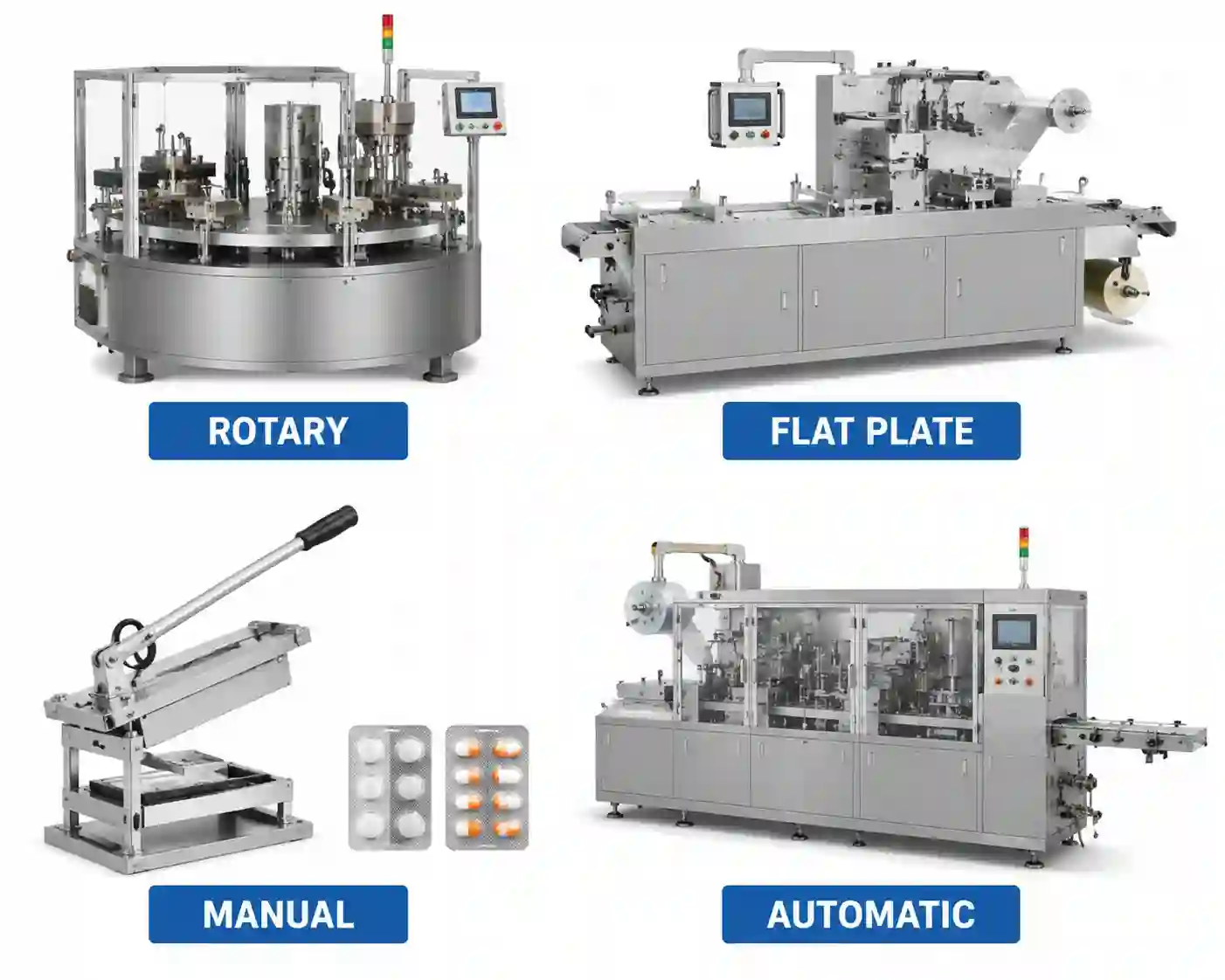
| Machine Type | Investment Level | Typical Production Characteristics | Common Trade-Off |
|---|---|---|---|
| Manual | Low | Flexible for small batches | Operator dependency |
| Flat Plate | Medium | Precise forming and sealing | Lower throughput |
| Rotary | Higher | Continuous high-speed production | Higher tooling precision required |
| Fully Automatic | Higher | Integrated production workflow | More complex maintenance and integration |
Related reading: Types of Blister Packaging Machines
In continuous multi-shift pharmaceutical production, rotary systems often show their advantage not during maximum speed testing, but during long-duration operational stability from our observing in real applications sites.
2. High-Speed Production Changes Everything
Many buyers compare machines mainly based on output speed. But in my purchasing experience, higher speed affects nearly every part of the blister packaging process:
- Feeding stability
- Foil tracking accuracy
- Heat distribution
- Sealing consistency
- Servo synchronization
- Product transfer behavior
At lower speeds, small alignment issues may remain hidden. but at higher speeds, those same tolerances can quickly create:
- Misfeeds
- Sealing inconsistency
- Cavity deformation
- Increased reject rates
This is one reason why two pharmaceutical blister packaging machines with similar specifications may behave completely differently during real production ramps as we all know.
3. Packaging Material Compatibility Often Creates Hidden Costs
Material selection directly affects machine configuration requirements. Standard PVC packaging usually allows simpler forming and sealing behavior. But once production shifts toward:
- PVDC-coated films
- Alu-PVC structures
- Cold-forming Alu-Alu packaging
Engineering complexity increases significantly. this is my personal bad experience, Especially with Alu-Alu blister packaging, tooling repeatability, forming pressure, and foil handling stability become much more critical.
Engineer observation:
In many Alu-Alu projects, the long-term challenge is not forming itself, but maintaining stable cavity repeatability during continuous production shifts (experience-based insight).
4. Buyers Often Underestimate Tooling and Changeover Costs
In pharmaceutical factories handling multiple SKUs, tooling systems often become one of the largest long-term operational factors. The initial machine quotation may not fully reflect:
- Tooling replacement frequency
- Changeover complexity
- Operator adjustment dependency
- Format repeatability
- Downtime during product switching
Real production perspectives: On multi-product lines, frequent format changes often create more downtime than machine failures themselves.
This becomes especially important for:
- OTC production
- Nutraceutical packaging
- Contract pharmaceutical manufacturing
5. Downstream Integration Significantly Changes Total Investment
A standalone blister packaging machine is very different from a fully integrated pharmaceutical packaging line.
Once downstream automation is added, the system may include:
- Cartoning machines
- Vision inspection systems
- Serialization modules
- Reject systems
- Case packers
- Central PLC or SCADA control systems
Related reading: Blister Packaging Line Workflow & Cartoning Integration
Many synchronization issues do not appear during FAT testing. They often emerge later during continuous multi-shift production, especially when small timing deviations accumulate across multiple machines as we observing.
6. The Cheapest Machine May Create the Highest Long-Term Production Cost
This is one of the most overlooked realities in pharmaceutical packaging equipment purchasing. Lower-cost machines may initially appear attractive, but long-term production costs often increase because of:
- Frequent maintenance interruptions
- Poor sealing repeatability
- Foil feeding instability
- Difficult cleaning access
- Operator-dependent adjustments
- Weak spare parts standardization
- Limited future scalability
Experienced pharmaceutical manufacturers usually evaluate lists as below—not just the machine price itself.
- Operational stability
- Maintenance accessibility
- Changeover efficiency
- Long-term production consistency
- Integration flexibility
What Experienced Buyers Usually Compare First
In many pharmaceutical equipment projects, experienced buyers focus less on headline speed numbers and more on:
- Sealing repeatability during long runs
- Tooling consistency
- Ease of maintenance access
- Servo stability
- Foil handling behavior
- Downtime recovery speed
- Future packaging line expansion possibilities
These factors often determine the real ROI of a blister packaging line.
FAQ
Q1: Why do blister packaging machine prices vary so much?
Because machine structure, automation level, production stability, material compatibility, and downstream integration all affect engineering complexity.
Q2: Is a higher-speed blister machine always better?
Not necessarily. Higher speed increases sensitivity to alignment, feeding, sealing, and synchronization issues.
Q3: Why do Alu-Alu blister lines usually cost more?
Cold-forming materials require stronger forming systems, more stable tooling repeatability, and tighter foil handling control.
Q4: What creates the biggest hidden production cost?
Downtime, unstable sealing, difficult changeovers, and poor downstream synchronization are among the most common long-term cost factors (experience-based observation).
Before Comparing Prices, Evaluate These Production Risks First
Choosing a pharmaceutical blister packaging equipment should not start with price comparison alone.
The more important question is:
Will the machine remain stable after months of real production?
If you are evaluating a new blister packaging line, our engineers can help assess:
- Your product type and sensitivity
- Packaging material compatibility
- Target production speed
- Future SKU expansion
- Tooling and changeover strategy
- Cartoning and downstream integration risks
- Long-term operational stability