5 Common Causes of Blister Seal Leaks and How to Fix Them
There is nothing more frustrating for a pharmaceutical production manager than watching a batch of blister packs fail the leak test (vacuum methylene blue test). Leaking blisters don't just mean wasted materials; they mean downtime, potential product recall risks, and a direct hit to your profitability.
Whether you are running a Flat-Plate or a Rotary machine, the principles of a hermetic seal rely on three pillars: Time, Temperature, and Pressure. When one of these fails, your seal fails.
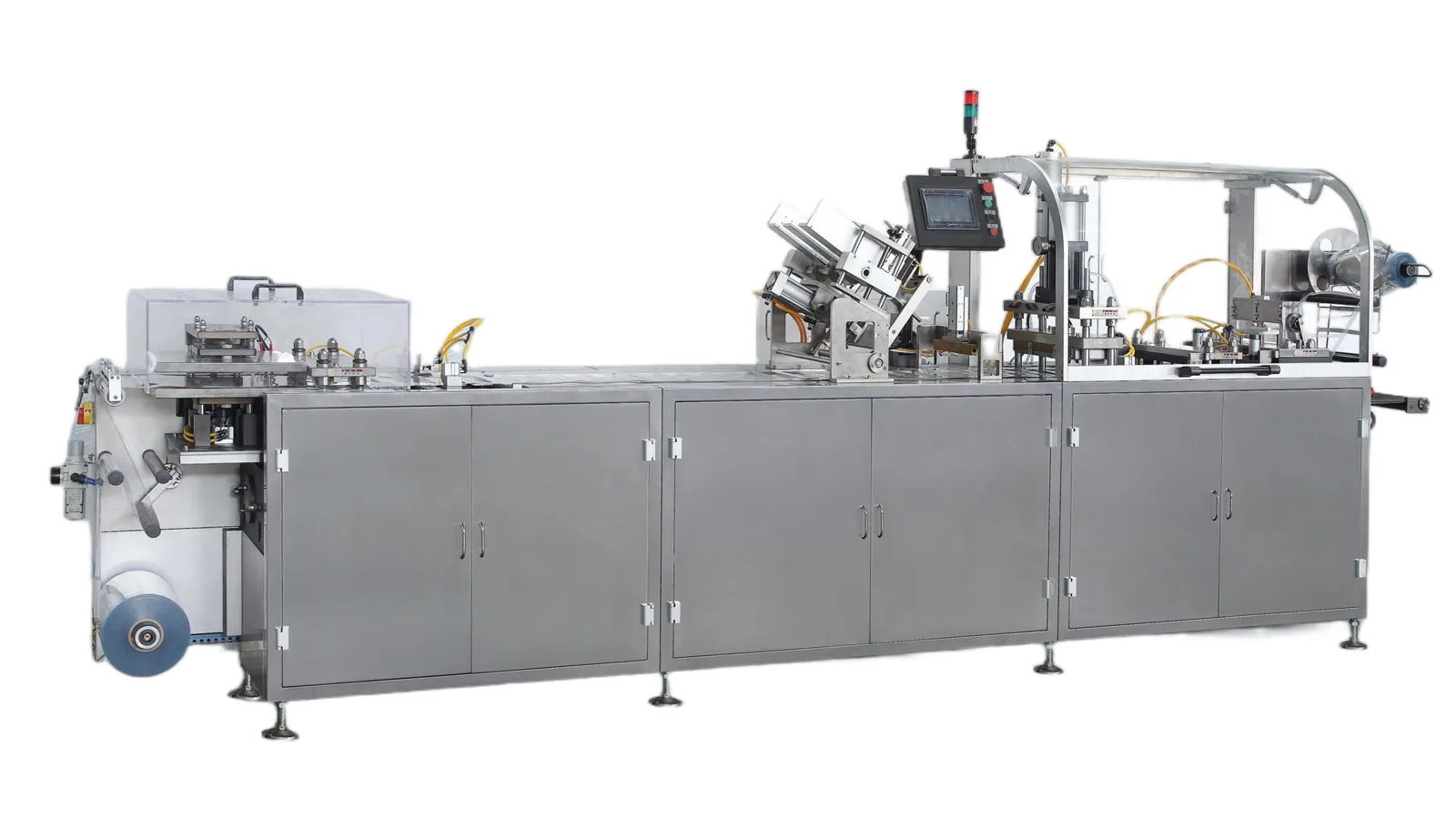
At Wenzhou Kxite Machinery, our engineers have troubleshot hundreds of production lines. Here are the 5 most common causes of blister pack sealing problems and practical ways to fix them.
1. Insufficient or Fluctuating Heat Sealing Temperature
The lidding foil (Aluminum) is coated with a heat-seal lacquer that requires a specific temperature to activate and bond with the forming film (PVC/PVDC). If the temperature is too low, the lacquer won't melt; if it's too high, it might scorch the film, causing micro-cracks.
How to Fix It:
- Check the HMI Reading vs. Actual Temp: Use an external pyrometer to verify that the sealing plate/roller temperature matches the display. Heating elements can degrade over time.
- Increase Dwell Time: If you are running at high speeds, the material might not have enough contact time to absorb the heat. Try slightly reducing the machine speed or increasing the temperature by 5-10°C.
- Consistency Check: Ensure your machine has a PID temperature controller. Old On/Off controllers cause temperature swings that lead to intermittent leaks.
2. Uneven or Inadequate Sealing Pressure
Even with the perfect temperature, a seal cannot form without sufficient pressure to fuse the layers. In older pneumatic machines, air pressure fluctuations are a common culprit.
How to Fix It:
- Check Air Supply: Verify that the compressed air supply is stable (usually >0.6 MPa). If other machines in the factory draw air simultaneously, pressure drops can cause weak seals.
- Inspect Sealing Cylinders: Look for leaks in the air cylinders or worn-out seals that prevent the machine from applying full force.
- Upgrade Solution: Modern machines, like our servo-driven Blister Packing Machines, use mechanical or servo pressure instead of pneumatics, ensuring 100% consistent force for every cycle.
3. Misalignment of Sealing Molds (Grid Pattern Issues)
The knurled grid pattern on your blister pack isn't just for decoration; it concentrates the pressure to ensure a tight seal. If the upper heat-sealing mold and the lower sealing mold are not perfectly parallel, you will see "blind spots" where the grid pattern is faint or missing.
How to Fix It:
- Carbon Paper Test: Place a piece of carbon paper between the sealing plates and run a cycle (without heat). Examine the impression. The pattern should be uniform across the entire surface.
- Leveling Adjustment: If the pattern is faded on one side, adjust the leveling screws on the sealing station. Even a misalignment of 0.1mm can cause leaks.
4. Worn or Dirty Knurling Molds
Over time, the heat-sealing molds can accumulate residue from the PVC fumes or the lacquer coating. This buildup acts as an insulator, preventing heat transfer. Additionally, the sharp ridges of the knurling pattern can wear down, reducing the effective sealing pressure.
How to Fix It:
- Routine Cleaning: Clean the sealing molds daily with a brass wire brush to remove carbon buildup and adhesive residue.
- Inspect for Wear: If the grid pattern on the blister looks flat rather than sharp, it’s time to replace the molds. Using worn molds requires excessive pressure, which damages the machine.
5. Incompatible Material Adhesive
Sometimes, the machine is fine, but the material is the problem. Not all Aluminum foils stick to all PVC films. For example, if you switch from standard PVC to PVDC or Aclar, the standard adhesive on your lidding foil might not bond correctly.
How to Fix It:
- Check the COA: Review the Certificate of Analysis from your foil supplier. Ensure the heat-seal lacquer (HSL) grammage is sufficient (typically 3-4 GSM) and compatible with your specific forming film.
- Pre-heating Station: For high-speed production, ensure your machine has a pre-heating station to soften the PVC before it hits the sealing station.
Quick Troubleshooting Guide
Use this table for a fast diagnosis when you encounter troubleshooting blister packing machine issues.
| Problem Symptom | Possible Root Cause | Recommended Solution |
|---|---|---|
| Seal peels off easily | Low Temperature / Low Pressure | Increase Temp by 5°C; Check air pressure gauge. |
| Foil is burnt / wrinkled | Temp too high / Speed too slow | Reduce Temp; Check for machine stoppages causing overheating. |
| Faint Grid Pattern (One Side) | Mold Misalignment | Perform Carbon Paper test; Re-level the sealing station. |
| Faint Grid Pattern (Random) | Worn Molds / Pressure Fluctuation | Inspect knurling for wear; Check air supply stability. |
| Air Bubbles in Seal | Uneven Pressure / Trapped Air | Ensure sealing plates are flat; Check knurling texture depth. |
Conclusion
Preventing blister leaks requires a combination of routine maintenance, proper material selection, and precise machine calibration. However, as production speeds increase, older pneumatic machines often struggle to maintain the consistency required for zero-defect packaging.
At Kxite Machinery, our latest generation of servo-driven Blister Packing Machines eliminates many of these variables by offering digital pressure control and self-aligning mechanisms.
Tired of constant tweaking and leaking packs?
Talk to our maintenance experts about upgrading your sealing station or auditing your current line efficiency.